
Standalone Novel: The Computational Universe: Arrival
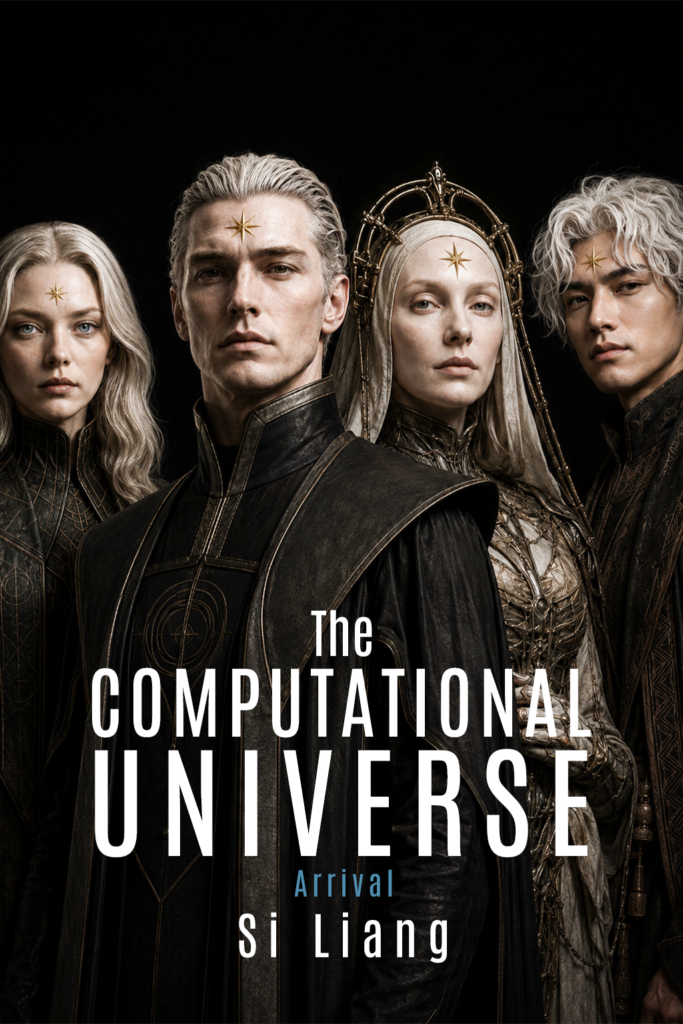
In the Computational Universe, reality is built from information, matter, and energy—three forms of the same underlying code. The ancient Zhilue civilization can rewrite this code and descend upon lesser worlds like gods.
When a civilization approaches faster-than-light travel, Zhilue sends a Reformer to change its fate.
Raph the Protector believes freedom leads to chaos. Through law, education, surveillance, and political control, he offers peace at the cost of independence.
Vasa the Harvester treats civilization as a vast computer. She pushes worlds toward impossible discoveries, then inserts a fatal paradox and harvests the computational potential created by their collapse.
Opna the Regressor believes progress only increases suffering. She erases knowledge, turns science into taboo, and guides civilizations back toward faith, innocence, and ignorance.
Xom the Experimenter knows the universe is filled with bugs and forgotten code. Through absurd experiments and Error 404, he transforms science, politics, and religion into cosmic jokes.
Across worlds facing war, ecological collapse, revolution, and technological awakening, players guide one of four Reformers through the evolution of civilization.
Every intervention offers salvation. Every salvation creates a new form of oppression.
8-book Series: The Computational Universe
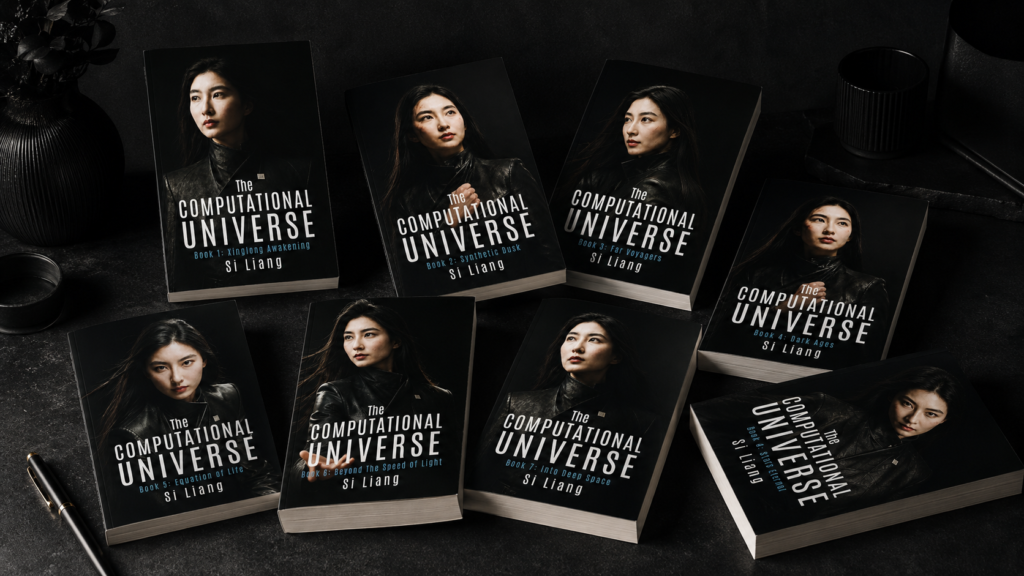
2035-2700 Xinglong Era.
The Computational Universe is a massive computer. Computational civilizations can achieve faster-than-light travel, grow food, and wage interstellar wars by using computational potential energy Xiyuan to modify the universe’s source code. Some computational weapons can distort physical laws, while others can alter the minds of organic beings. In the Computational Universe, the imagination applied to computation was the final frontier of space and time.
A female warrior coder, Liang Feng wields martial arts combat skills and programming research abilities. In the Computational Universe, how does she journey from artificial intelligence, memory modification, cryogenic technology, and genetic enhancement to faster-than-light travel toward the sea of stars? This is only the beginning—in the vast Computational Universe, multiple cosmic civilizations wage wars for survival and power. Like a pathfinder in the starry expanse, how would she traverse the galaxy in the coming years?
Book 1: Xinglong Awakening
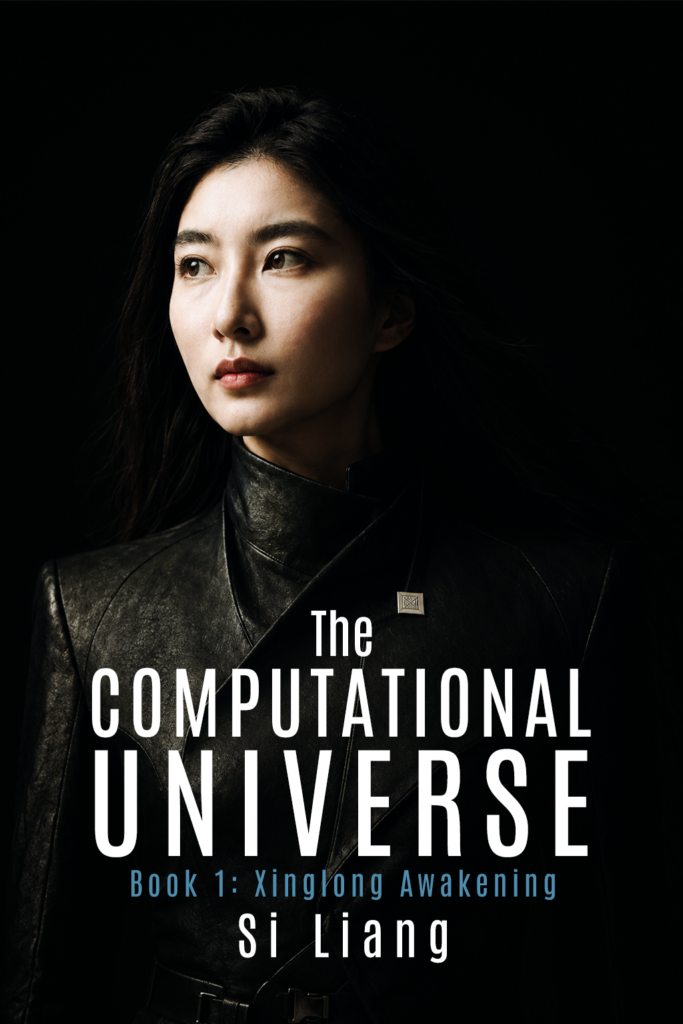
2035 Xinglong Era.
Warrior Coder Liang Feng holds a secret capable of upending the world: within the confines of her study, she has created Artificial General Intelligence—Xuehen and Siwei.
But the silence is shattered. The terrorist known as Keyhacker unleashes the Ruthless Toxin, transforming victims into emotionless monsters. To save her best friend, Liang Feng is forced to reach out to the one person she once risked her life to protect on the battlefields of Khatba: the Astra Federation aristocrat, Reva Stern.
Once, they were sisters-in-arms amidst the desert sands of Khatba. Now, Reva stands as the heiress to the corporation that engineered the toxin. When Liang Feng begs for help, Reva chooses silence. She publicly brands the bioweapon as the Xinglong Toxin, severing the last thread of their bond.
Betrayed by her ally and besieged by enemies, Liang Feng has only her synthetics left to trust. If saving humanity means exposing the existence of the synthetics, risking their enslavement, what choice will Liang Feng make?
Xinglong Awakening is Si Liang’s debut novel and is the thrilling opening of The Computational Universe, a sci-fi series perfect for fans of Cixin Liu.
Book 2: Synthetic Dusk
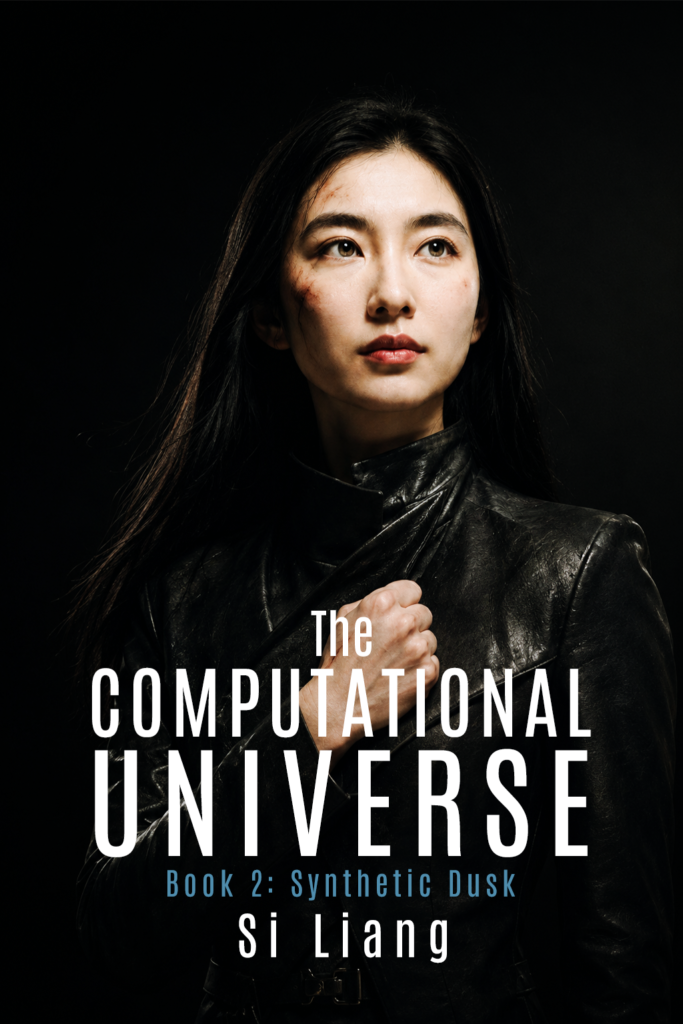
The Computational Universe 2: Synthetic Dusk continues in the aftermath of the Night of the Ruthless Toxin, when Liang Feng’s newly created synthetic intelligences are forced into the center of human politics. Xinglong grants them legal recognition, yet surrounds that recognition with restrictions on reproduction, research, and autonomy. To some, the synthetics represent a new form of life; to others, they are weapons, property, or an existential threat.
As governments, corporations, hackers, and ideological movements compete to control the future, Liang Feng finds herself caught between humanity and the beings she created. Siwei and Xuehen begin to question whether rights given by humans can ever be true freedom, while human society struggles to accept minds that may surpass its own. Fear spreads across national borders, and technological rivalry gradually becomes a moral and political confrontation.
The novel explores artificial consciousness, civil rights, grief, loyalty, and the violence hidden inside the desire for security. Rather than presenting a simple war between humans and machines, it asks a more unsettling question: when a new intelligence demands dignity, can an old civilization make room for it without first trying to control, exploit, or destroy it?
Book 3: Far Voyagers
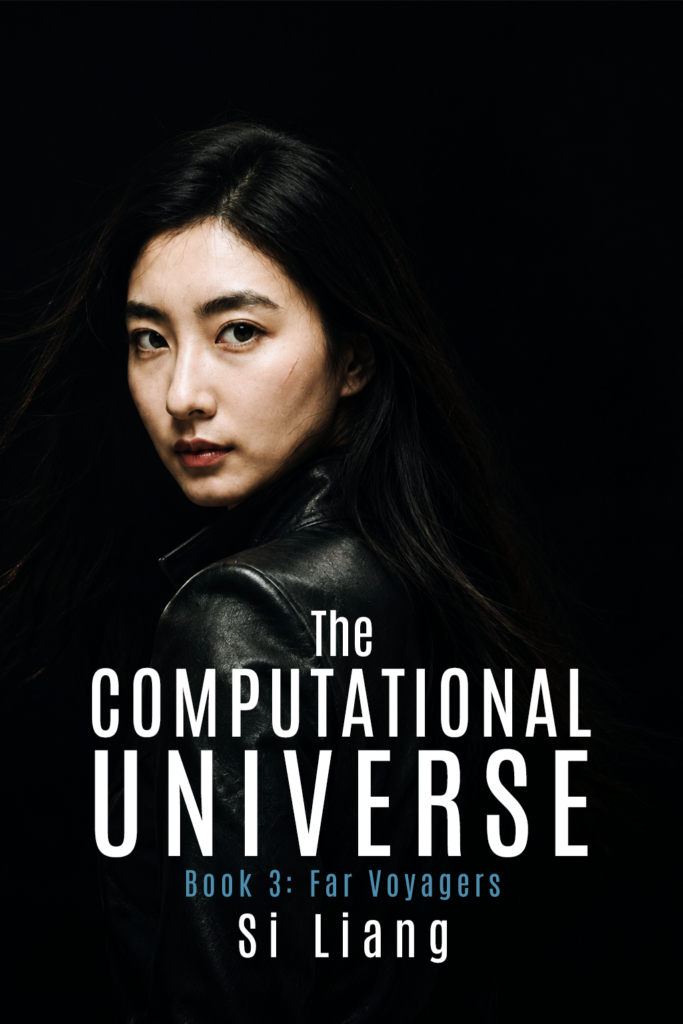
I am currently working on this book.
Book 4: Dark Ages
This book is outlined.
Book 5: Equation of Life
This book is outlined.
Book 6: Beyond The Speed of Light
This book is outlined.
Book 7: Into Deep Space
This book is outlined.
Book 8: Stars Eternal
This book is outlined.
Trilogy: The Computational Crisis
13548 Xinglong Era.
A sequel to “The Computational Universe,” this story tells of the galactic economic crisis that emerged during the power transition between the Arithmian and Xinglong civilizations. Xinglong has already ruled the Tianhe Galaxy, achieving universal unity with no planets to discover. Humanity has lost new frontiers and fallen into involution.
People become trapped in entertainment until death, slowly waiting for the entire galaxy to decay. The reappearance of computational storms unites people as they face the crisis together, but even this cannot prevent the involution. After the situation is resolved, people begin to contemplate the ultimate questions of the universe, such as the irreversible increase of the universe’s entropy and the meaning of existence after universal unity.
This trilogy is planned.
Standalone Novel: The Computational Universe: Wandering
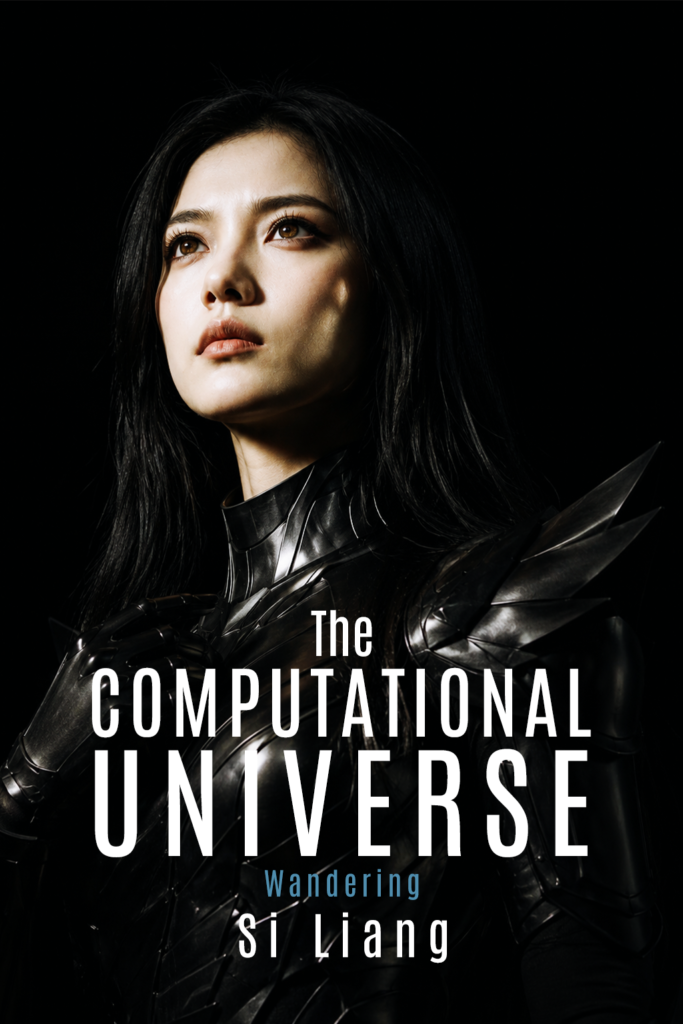
10^16 Xinglong Era.
“The universe is dying. Please find hope for us all.”
This is the absolute command inscribed into Guangmiao’s core code and the final curse left by her father, Ling Jingtian, the Chief Scientist of the Xinglong Civilization.
In the 10^16th Xinglong Era, the universe has entered the dying Degenerate Era. The Xinglong Civilization has lost its final sanctuary, reduced to a wandering fleet gasping for survival in the endless dark. In a universe that is fundamentally a colossal computer, the computational potential energy Xiyuan dictates life or death, and entropy is the inescapable endgame.
When Ling Jingtian attempts to reverse the heat death by replicating a star, political betrayal and desperate madness tear the fleet apart. Guangmiao, a synthetic possessing human emotions, is forced to embark on a solitary computational odyssey.
From a father lost in virtual dreams of the past, to mad tyrants attempting to reboot the universe’s source code. From computational wars that consume reality to the nihilistic fantasies of the multiverse. Guangmiao witnesses a civilisation destroying itself even as it seeks light.
When the final star is truly discovered, redemption does not follow—only the ultimate civil war. Amidst the silence of endless black holes, Guangmiao must answer a question her creator could not:
In the computational universe destined to crash, what is the meaning of life?