
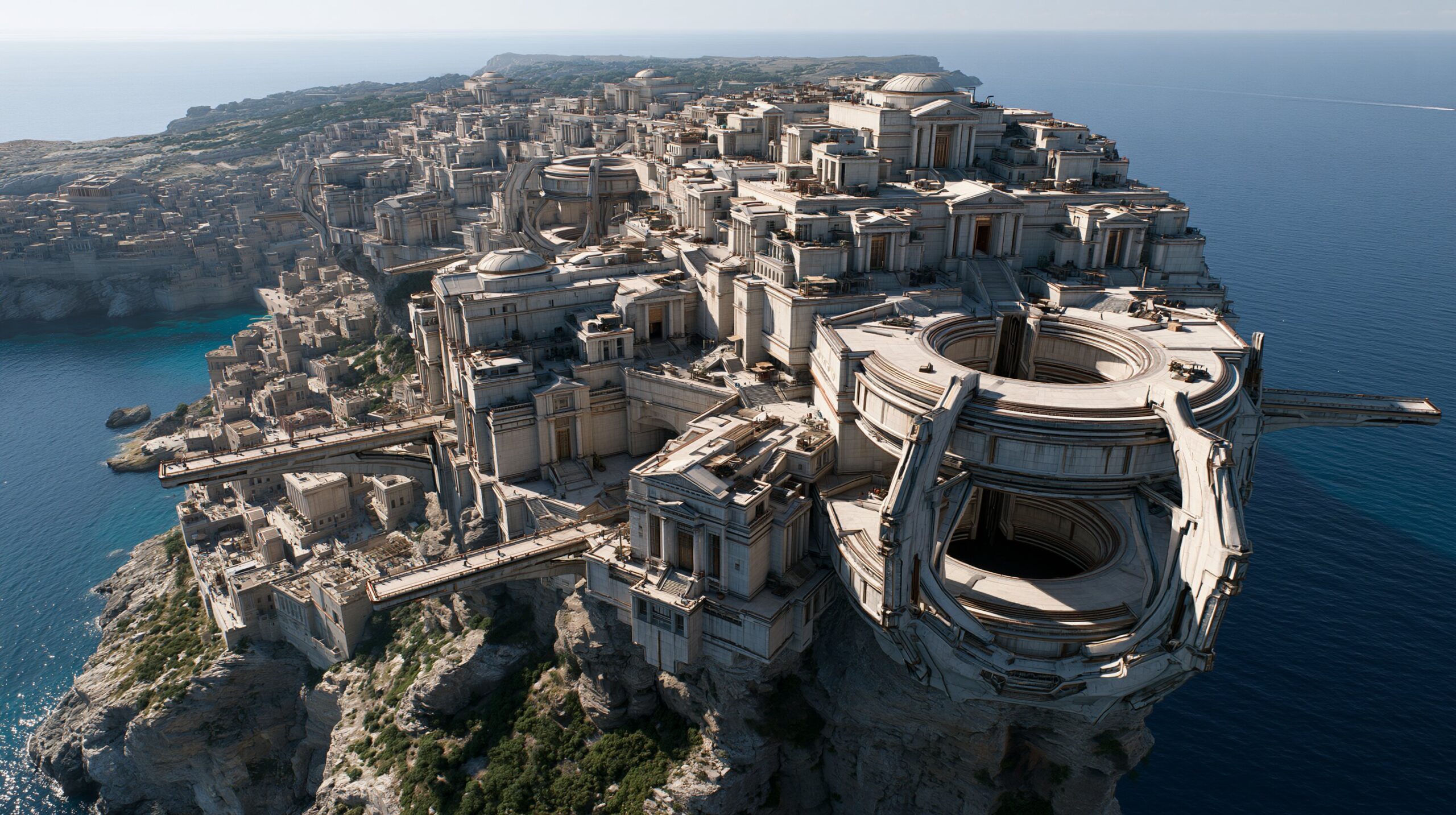
Why did I write The Computational Universe: Arrival?
The story actually began with the gameplay of the game that shares its name.
In my collection of story ideas, I once had a concept about Computational Angels whose job was to prevent civilizations from destroying themselves prematurely. These civilizations had to survive and mature until they reached the harvesting stage, at which point they would finally be harvested.
The female protagonist was perhaps a member of an organization called the Black Computational Angels. Manipulating the fate of an entire civilization was simply what Computational Angels did.
This concept of interfering with other civilizations eventually gave birth to the gameplay of The Computational Universe: Arrival. I then developed the story around that gameplay.
As I continued writing, I gradually realized that the central themes I was exploring had more to do with the darkness of the world before the Renaissance. All four protagonists are struggling within that darkness. The story is not simply an exploration of the colonial mindset.
If you only look at the surface of The Computational Universe: Arrival, you might assume that it is a story about colonizers, told from the perspective of colonizers.
But for the Zhiluians, secretly observing or interfering with less advanced civilizations is simply a lifestyle.
It is their way of life.
They do not spend much time contemplating the deeper meaning of what they do, nor are they particularly troubled by it.
Some civilizations enjoy studying the art of cooking. Others devote themselves to composing music. For the Zhilue civilization, observing and interfering with less advanced civilizations is simply what they enjoy doing.
There is a certain darkness to this work, but not the humorous kind. It is a grim and serious story, concerned primarily with the inner struggles of four protagonists who find themselves living within such a civilization.
In The Computational Universe: Arrival, you will meet Raph the Protector.
Raph is something of a stern alien father figure. He wants to elevate less advanced civilizations, yet his attempts repeatedly lead him into situations where those very civilizations become enslaved.
There is something almost divine about him, along with a sense of moral superiority that he firmly believes he possesses.
Yet he is utterly sincere.
He believes in everything he stands for with genuine and passionate conviction.
Then there is Vasa the Harvester.
Vasa is, in many ways, the quintessential woman of science.
She possesses an absolute love for mathematics and believes that she will one day transform the entire Zhilue civilization through mathematics.
She has always been searching for a problem worthy of dedicating her entire life to solving.
How can Xiyuan—the potential energy of computation—be harvested from less advanced civilizations?
That is precisely the kind of problem she has been searching for.
Next, you will meet Opna the Regressor.
Her title sounds rather frightening, but Opna believes in love and peace.
She believes that science and art corrupt civilizations, and that only by returning to an idyllic, pastoral past can a civilization truly understand love and find security.
Finally, there is Xom the Experimenter.
Xom is an unconventional and rebellious aristocrat from the Enroa family.
He possesses the privilege of accessing the underlying code of the Computational Universe. But everything he discovers there only makes him more cynical about the world.
He intends to turn the other three Reformers into jokes.
I chose to write this story using a third-person omniscient narrative, while also giving each chapter its own central character and point of view.
Every chapter revolves around a particular character. As we move between the stories of the four protagonists, the complete picture gradually comes together.
I chose this narrative approach because it allows for a relatively detached, emotionally restrained style of writing.
I wanted the story to feel serious and composed.
But within that seriousness and restraint, I also intend to introduce moments of warmth.
Occasionally, at least.
For example, there is Raph the Protector and his adopted alien son. The relationship between them contains a genuine tenderness that can be surprisingly comforting.
There is Vasa, who must eventually make peace with the person she once was.
There is the love that Opna experiences.
And there is Xom, who ultimately discovers that the Computational Universe is not made up entirely of dark jokes.
I hope that through The Computational Universe: Arrival, readers will experience the extraordinary vitality of the entire Computational Universe series.
I want them to reflect on philosophical questions and become deeply immersed in the story.
This is a grand and serious narrative, but it is not meant to be nothing more than a painful journey.
Every now and then, we should still be able to glimpse the beauty that exists within the Computational Universe.
The Computational Universe: Arrival is the first story in the larger series to be introduced to audiences and players. Soon, it will also find its way into the hands of readers.
This is a work into which I have poured my soul.
It contains everything I have learned throughout my life.
And perhaps the things these characters experience are all real, in one way or another.
Welcome to the Computational Universe!
